Water Damage Restoration and Mitigation in Kent
Usual size: two rooms or more, or one room with water in the walls, the floor and the ceiling below.
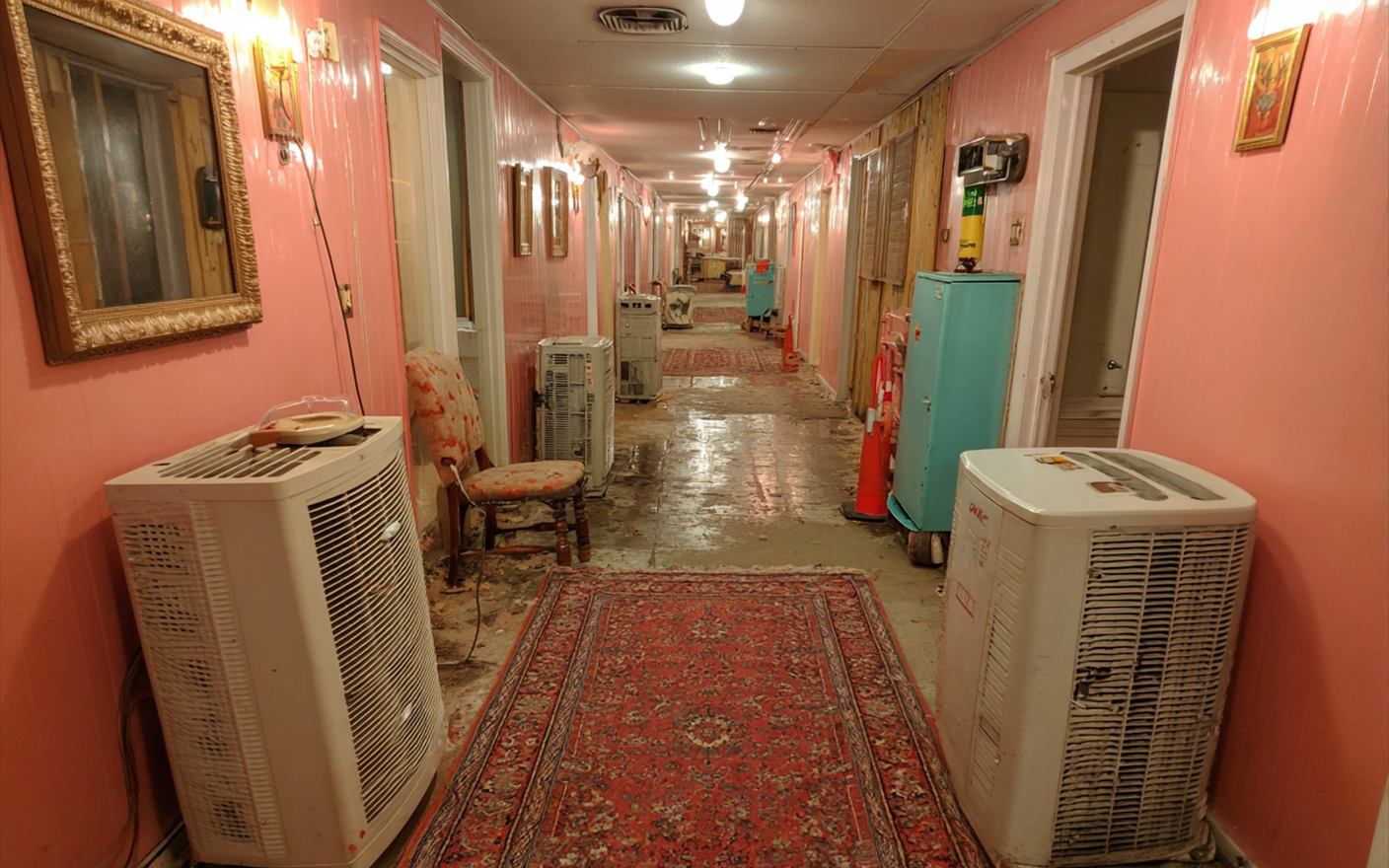
Water damage restoration is the full job, from the first reading to the last coat of paint. It begins with mitigation: stopping the water, pulling it out, and drying the structure until the meter says it's done. It ends with restoration in the narrow sense: putting back the drywall, flooring, trim and finishes that had to come out. Some companies handle both halves; some do the drying and refer the rebuild. Either way, the same question comes first: how big is it? In Kent, call (253) 322-1508 to reach a water restoration company that works here.
Mitigation and Restoration, Side by Side
Mitigation: stop it and dry it
The urgent half. Water extraction with portable or truck-mounted units. Moving furniture and contents out of the wet area. Removing materials that can't be saved, like soaked pad, swollen particleboard and drywall that has wicked water up from the floor. Setting air movers and dehumidifiers, then measuring every day until wet materials match dry ones. Most of the damage that gets worse over time gets worse during this half, so it can't wait.
Restoration: put it back
The rebuild. New drywall, tape and texture. Insulation where it was pulled. Flooring, base trim, cabinets or doors that had to come out. Paint to match. This half starts only when the drying log says the framing and subfloor are dry, and it usually takes longer than the drying did.
Several rooms, or more than you can measure?
From the first drip to the last repair: (253) 322-1508.
Call (253) 322-1508How a Job Gets Sized
A restoration company sizes a water job on its first visit, and the size drives everything after. Expect it to work through four questions.
- Where did it start, and has it stopped? A failed supply line, an overflowing tub, a water heater, rain getting in. The source has to be stopped before drying can work.
- How far did it travel? A meter, and sometimes a thermal camera, maps the wet edges in floors, walls and ceilings. Water often goes farther than the visible marks.
- What kind of water is it? Clean water from a supply line is handled differently from water that has sat for days or picked up dirt along the way. The company explains which category it's dealing with and what that changes.
- What's it soaking? Carpet and pad, hardwood, laminate, particleboard subfloor, drywall, insulation and cabinets all dry at different speeds, and some can't be dried at all.
The answers set how many air movers and dehumidifiers go in, what comes out, and how many days the drying will take.
The Days on Site
A typical clean-water job in a Kent house takes three to five days to dry and longer to rebuild. Day one is extraction, removal of what can't stay, and setting equipment. The middle days are measuring and adjusting: moving fans as some areas dry and others lag, opening a cavity that isn't coming down. The last day of drying is the one where every wet reading meets its dry target. Lower levels, hardwood and wall cavities behind cabinets often run longer. Rebuilding follows once the readings say it can.
What Changes the Cost
No two jobs cost the same, and this site doesn't set prices. Here's what moves the number:
- How many rooms and floors the water reached
- What has to come out: pad, drywall, insulation, cabinets, flooring
- How long the water sat before anyone started drying
- The kind of water and the cleaning it needs
- How many days the equipment runs, and how many pieces
- Access, such as a finished ceiling under a bathroom or a condo with shared walls
- Rebuild scope: matching texture, flooring and trim takes time
Ask the company to put the scope in writing before work begins, and to list what's included in the drying and what belongs to the rebuild.
Checking a Washington Contractor
Before anyone opens a wall in your house, look the company up. Washington's Department of Labor & Industries keeps a public register of contractors that shows whether a registration is active, the bond and insurance on file, and any infractions. It takes a couple of minutes.
Look up a contractor on Washington L&I Verify
Restoration in Kent Houses
Kent's housing shapes what most restoration jobs look like here. On East Hill, subdivisions from the 1960s through the 2000s mean split-levels, tri-levels and two-story houses with bathrooms over living space, so water often travels down through a ceiling and into the floor below it. On West Hill, older ramblers sit alongside condo buildings and apartment complexes, where one unit's leak becomes the next unit's ceiling. Down on the valley floor, older houses near downtown sit low and close to the water table.
Many of these houses have been remodeled once or twice. That matters because layers of flooring, patched drywall and added bathrooms hide where the water went. A company that measures before it opens anything saves you from tearing out more than needed.
Is Water Mitigation the Same as Water Damage Restoration?
Not quite. Mitigation is the first half: stopping the water, extracting it and drying the structure. Restoration is the rebuild that follows. People use the words loosely, so ask any company which half it's quoting.
How Do I Know the House Is Really Dry?
Ask for the moisture log. A good company records wet readings, dry readings from untouched rooms, and air readings, every visit. Drying is done when the wet materials read the same as the dry ones, not when they feel dry to the touch.
Restoration Across Kent and Nearby
The Valley floor
West Hill
East Hill
- East Hill NorthEast Hill
- East Hill SouthEast Hill
- Panther LakeEast Hill
- Lake MeridianEast Hill
- MeridianEast Hill
- KentridgeEast Hill
Beyond Kent