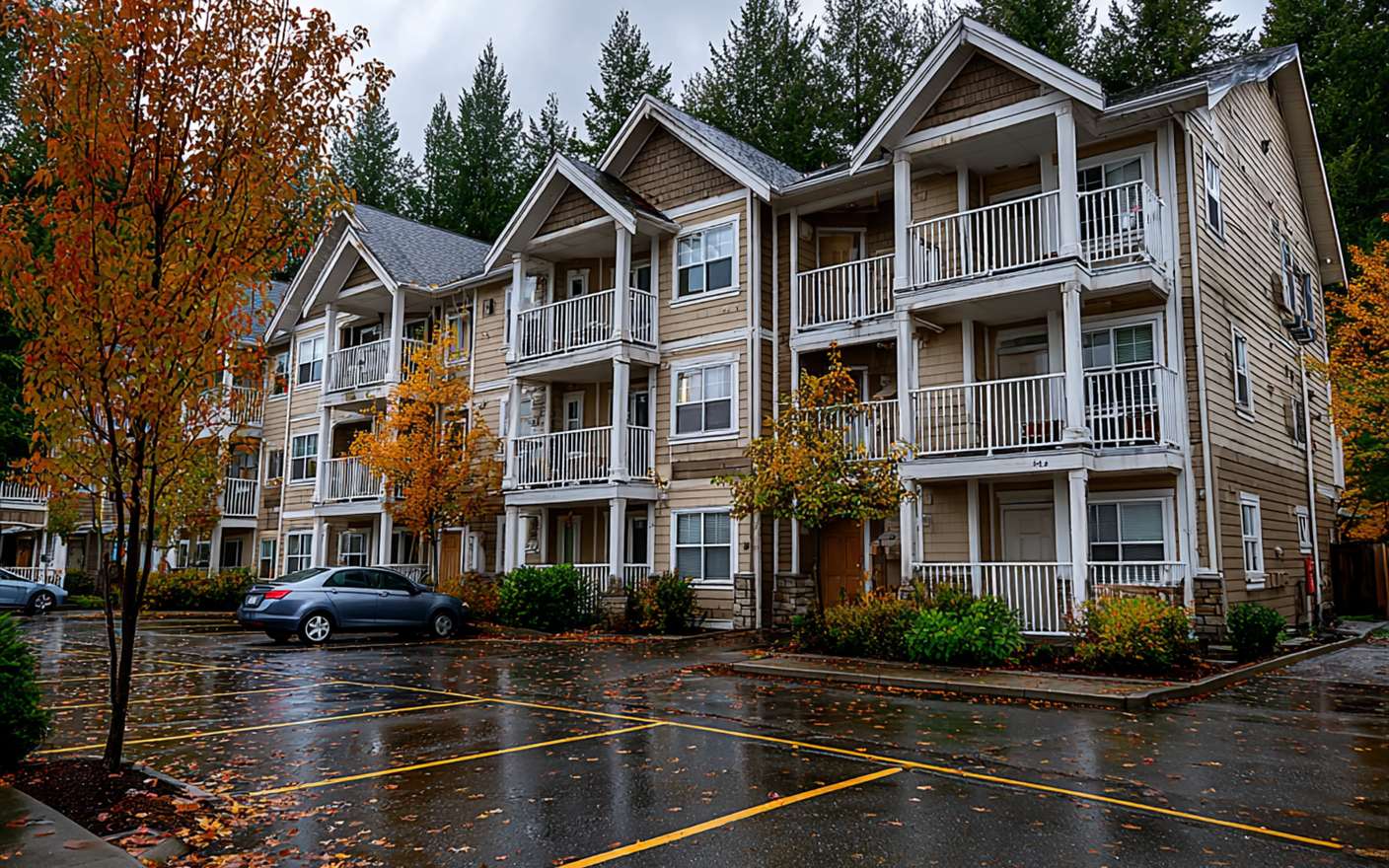
Water Damage Between Condo and Apartment Units in Kent
Usual size: two units, sometimes three, plus a shared ceiling or wall.
A leak between units is a drying job and a people job at the same time. The water doesn't care where one unit ends and the next begins. It runs through the floor of the unit above, into the ceiling cavity, and out through the ceiling of the unit below. Drying it means getting into both. That means the upstairs owner or tenant, the downstairs owner or tenant, and often an HOA or a property manager all have a part. For water damage from a condo or apartment above you in Kent, call (253) 322-1508.
Who Usually Handles What
These are general patterns, not legal advice; your declaration, bylaws, lease and policies decide the details.
| Person | What they usually do |
|---|---|
| The unit owner where it started | Stops the water, reports to the HOA and the neighbor, and contacts their own insurer |
| The unit owner below | Documents the damage, reports to the HOA and their insurer, and arranges drying in their unit if the HOA doesn't |
| The HOA or building manager | Handles common elements, often the shared ceiling and wall framing, and may hold a master policy |
| A landlord | Arranges repairs in a rented unit; the tenant reports and protects their own belongings |
| A tenant | Reports in writing to the landlord or manager, with photos and the date |
Washington's condominium laws, RCW 64.34 for older condos and RCW 64.90 for newer ones, set how a declaration divides units from common elements and how insurance is handled. The declaration for your building is where to look first. More: the condo above you.
RCW 64.90, the Washington Uniform Common Interest Ownership Act
If You Rent
If you rent an apartment or a condo and water is coming in, tell your landlord or property manager right away, in writing, with photos and the date. In most rentals, they arrange the repairs. Move your belongings out of the wet area and keep receipts for anything you have to replace; renter's insurance, if you have it, usually covers your own things.
Drying a Shared Ceiling or Wall
The cavity between units is where most of the water sits. Between a condo floor and the ceiling below, there's subfloor, joists or trusses, often sound insulation, and the drywall of the lower ceiling. A restoration company measures from both units to map the wet area, then usually opens the lower ceiling to dry the cavity, because that's the side that can be patched without lifting a floor. Sometimes the upstairs flooring has to come up too. Air movers and dehumidifiers may run in both units at once.
Fire separations matter. Ceilings and walls between units are often built as fire-resistive assemblies. When they're opened, the rebuild has to put them back to the same standard, which is one more reason to involve the HOA or manager early.
Where Leaks Between Units Usually Start
- Toilets: a failed wax seal or a supply line under the tank
- Tubs and showers: a drain gasket, a shower pan or grout lines; see bathroom leaks you don't see
- Washers: a burst hose in a stacked laundry closet
- Dishwashers and fridge lines: under kitchen cabinets that sit over another kitchen
- Water heaters: a tank in a closet, sometimes shared across a wall
Condos and Apartments in Kent
Kent has a lot of multi-unit housing, much of it along its main roads. On West Hill, condo buildings, townhomes and apartment complexes line Pacific Highway and the streets near the Kent Des Moines and Star Lake light rail stations. On East Hill, they sit along the big arterials and near the shopping centers. Many date from the 1970s through the 1990s and are on their second or third set of water heaters and supply lines.
What to Keep, Whichever Unit You're In
Two households and an HOA means more people asking for the same records later. Keep these in one place:
- Photos of the damage in your unit, with dates and something for scale
- Copies of every message to the neighbor, the HOA or manager, and your insurer
- The restoration company's written scope and its daily moisture readings
- A list of anything removed from your unit: drywall, insulation, flooring, cabinets
- Receipts for anything you paid for, including hotel nights if you couldn't stay
The HOA's insurer, your insurer and the neighbor's insurer may each ask for parts of it.
When It Goes Down More Than One Floor
In three-story buildings, a leak on the top floor can reach the ground floor. Water follows plumbing chases and the walls around stacked bathrooms and kitchens. If your ceiling is wet and the unit directly above says theirs is dry, the source may be two floors up. The HOA or manager usually needs to check every unit in the stack. A restoration company measuring from each unit finds the path.
Townhomes and Shared Walls
Townhomes sit side by side rather than stacked, so leaks travel sideways through the shared wall. A supply line in the party wall, a washer on the other side, or a shower against it can wet your drywall without anything above you. Ask the neighbor to check their side, and tell the HOA, since shared walls are often common elements.
The Leak Is Upstairs, but the Damage Is in My Unit. Who Pays?
It depends on the cause, your HOA's declaration and insurance policies, and sometimes on who was careless. Report it to the HOA and your insurer quickly, document everything, and let them sort out responsibility. The drying shouldn't wait for that answer.
Can the Restoration Company Work in Both Units?
Usually, if both occupants give access. The upstairs unit often needs the source checked and the floor measured, and the downstairs unit needs the ceiling opened and dried. Coordinating access early keeps the job short.
Condo and Apartment Jobs Around Kent
The Valley floor
West Hill
East Hill
- East Hill NorthEast Hill
- East Hill SouthEast Hill
- Panther LakeEast Hill
- Lake MeridianEast Hill
- MeridianEast Hill
- KentridgeEast Hill
Beyond Kent