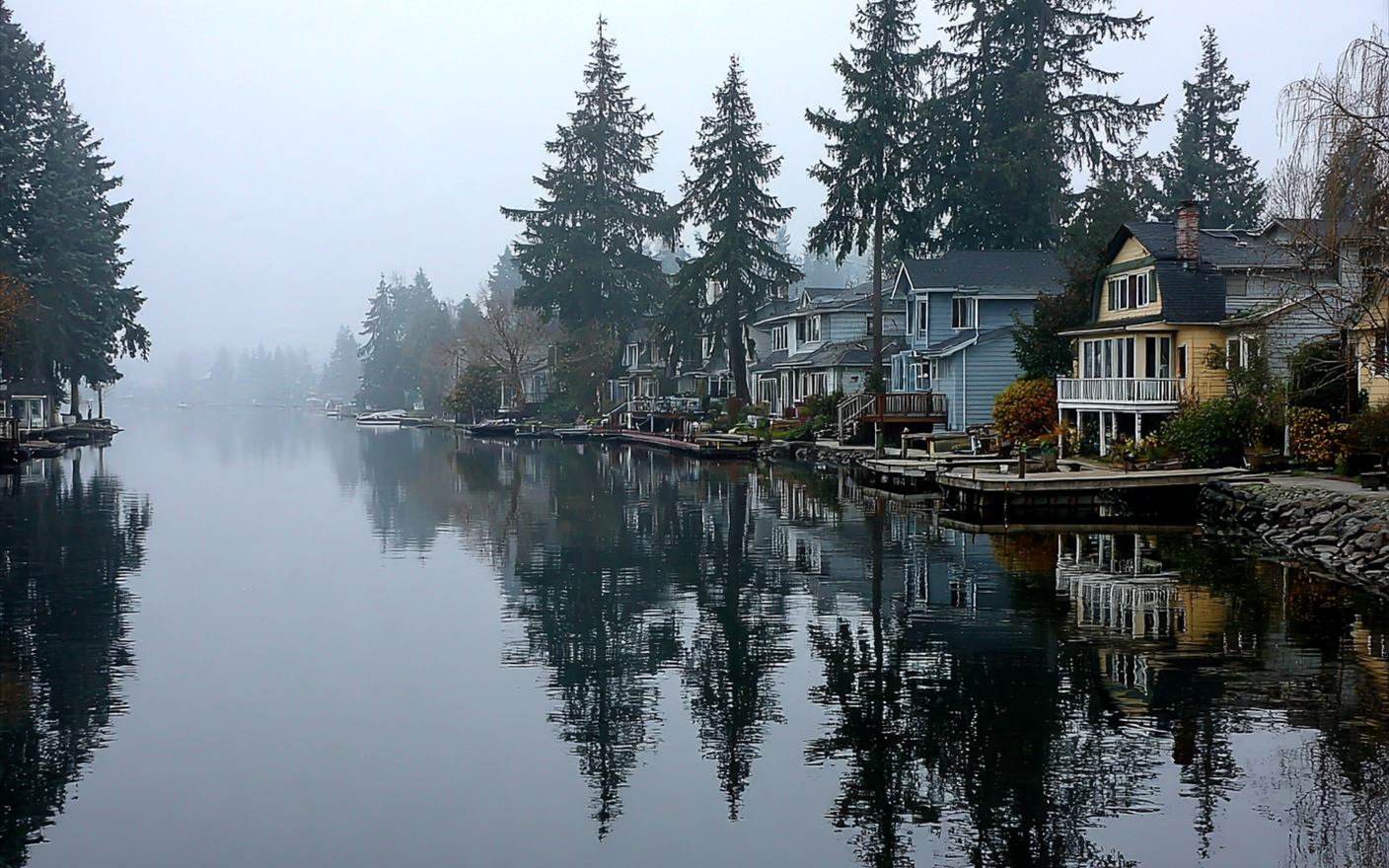
Usual size: the lowest floor or crawlspace of a house near the water, damp along one side or across the whole floor after long rains. Kent has more lakes than most people expect from a valley city. Lake Meridian is the largest, on the southeast side of East Hill. Panther Lake gave its name to the neighborhood that joined Kent in 2010. Lake Fenwick sits in a park on West Hill. Houses near each one share a trait: the ground under them holds water close to the surface for much of the year.
Why Lake Lots Stay Wet
A lake is, in a sense, where the water table comes to the surface. The ground around it slopes down toward that level, and in the wet months the water table rises with the lake and the soil around it. A house on a lakeside lot sits closer to that water than a house a few streets uphill. Its lowest floor, whether a basement, a daylight level or a crawlspace, is the part most likely to be at or near the water table in midwinter.
That's why lake-lot water problems tend to follow the weather rather than the plumbing. After weeks of rain, water shows up along the base of the wall on the lake side, rises through cracks in the slab, or collects on the vapor barrier in the crawlspace.
Cabins That Became Houses
Some of the homes closest to Lake Meridian started out as summer cabins and were enlarged into year-round houses over the decades. That history often shows: additions on different foundations, plumbing that's a patchwork of eras, lower floors that were dug out later. Each joint between old and new is a place water can find its way in.
What Usually Shows Up
| Where | What you see | What it usually is |
|---|---|---|
| Lower-level wall facing the lake | A wet line along the bottom, damp drywall | Ground water at the wall-floor joint |
| Slab floor | Damp patches, carpet wet from below | Water rising through cracks or the slab itself |
| Crawlspace | Standing water on the vapor barrier, sagging insulation | High water table or poor drainage under the house |
| Around the water heater on the lowest floor | Water spreading across the floor | Could be the tank, or ground water; check the tank first |
Separating Lake Water From a Leak
If water appears on the lowest floor, ask two questions. Has it been raining hard for a while? And is anything plumbed nearby leaking? A tank, a washer or a supply line leaks whether or not it's been raining; ground water follows the weather. A restoration company uses meters and the pattern of wetness to tell the difference, because the fix for each is different. Drying works either way, but ground water keeps coming back unless drainage is addressed, which is separate work.
Drying a Lake-Lot Lower Floor
Expect it to take longer than drying an upstairs room. The air near the lake is damp, the concrete holds water, and if the water table is still high, the slab and wall keep feeding moisture into the room. Dehumidifiers do most of the work, with the house kept closed. A good company measures daily and says plainly if ground water is outpacing the drying.
Docks, Decks and the Lake Side of the House
Many lakefront houses have a deck or a walkout lower floor facing the water. The walkout door is often the lowest opening in the house, and runoff from the yard or a slope behind the house heads for it. Decks attached to the house can also send water against the wall if the flashing where the deck meets the house is worn. Those are outside repairs, but they explain why the lake-side wall is usually the wet one.
The Lakes Themselves
Lake Meridian is the biggest of the three, a deep glacial lake with a public park and summer swimming beach. Panther Lake is smaller and shallower, surrounded by houses and wetland. Lake Fenwick is the centerpiece of a city park on West Hill. All three sit in the kind of low ground where water collects, and the houses closest to them feel it in the wettest months.
Questions
Is this flood damage?
Not usually in the insurance sense. Ground water seeping in isn't the same as a lake overflowing into the house. Policies treat them differently; ask your insurer.
Can I find out how high the water table gets?
King County's iMap shows mapped floodplains, wetlands and drainage features around the lakes, which helps explain why a lot behaves the way it does.
Should I run a sump pump?
That's a drainage question for a waterproofing contractor, separate from the drying. The restoration company can tell you what it saw.
Around Kent
Lake lots ring Lake Meridian and Panther Lake. Larger semi-rural lots around Lake Morton in Lake Morton-Berrydale share the same pattern. On West Hill, Lake Fenwick sits below the neighborhoods of West Hill North. The service page for lower floors is flooded basements and lower levels.
King County iMap: floodplains, wetlands and drainage
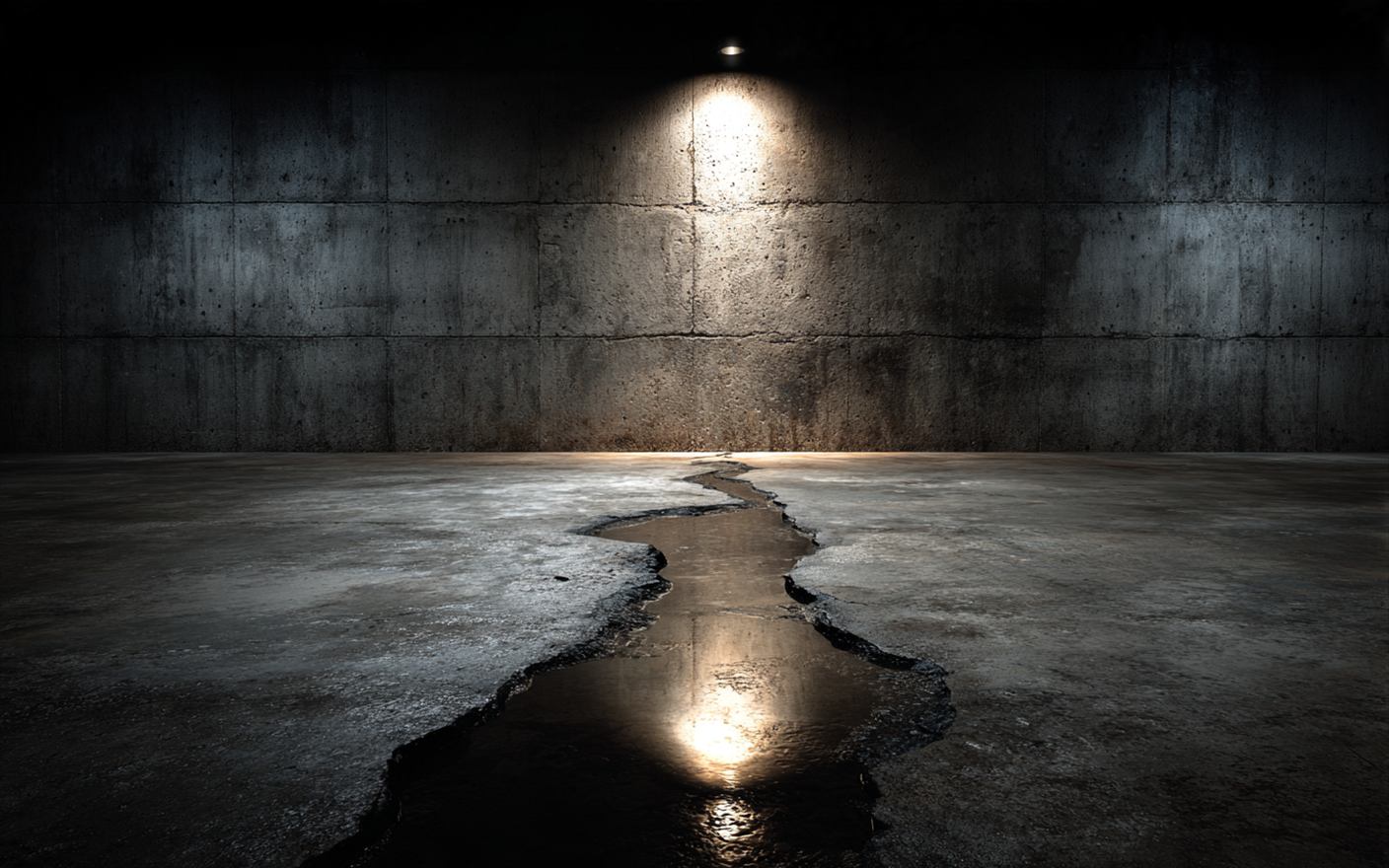
Cove Joint Seepage: Where the Basement Wall Meets the Floor
The thin wet line after weeks of rain.
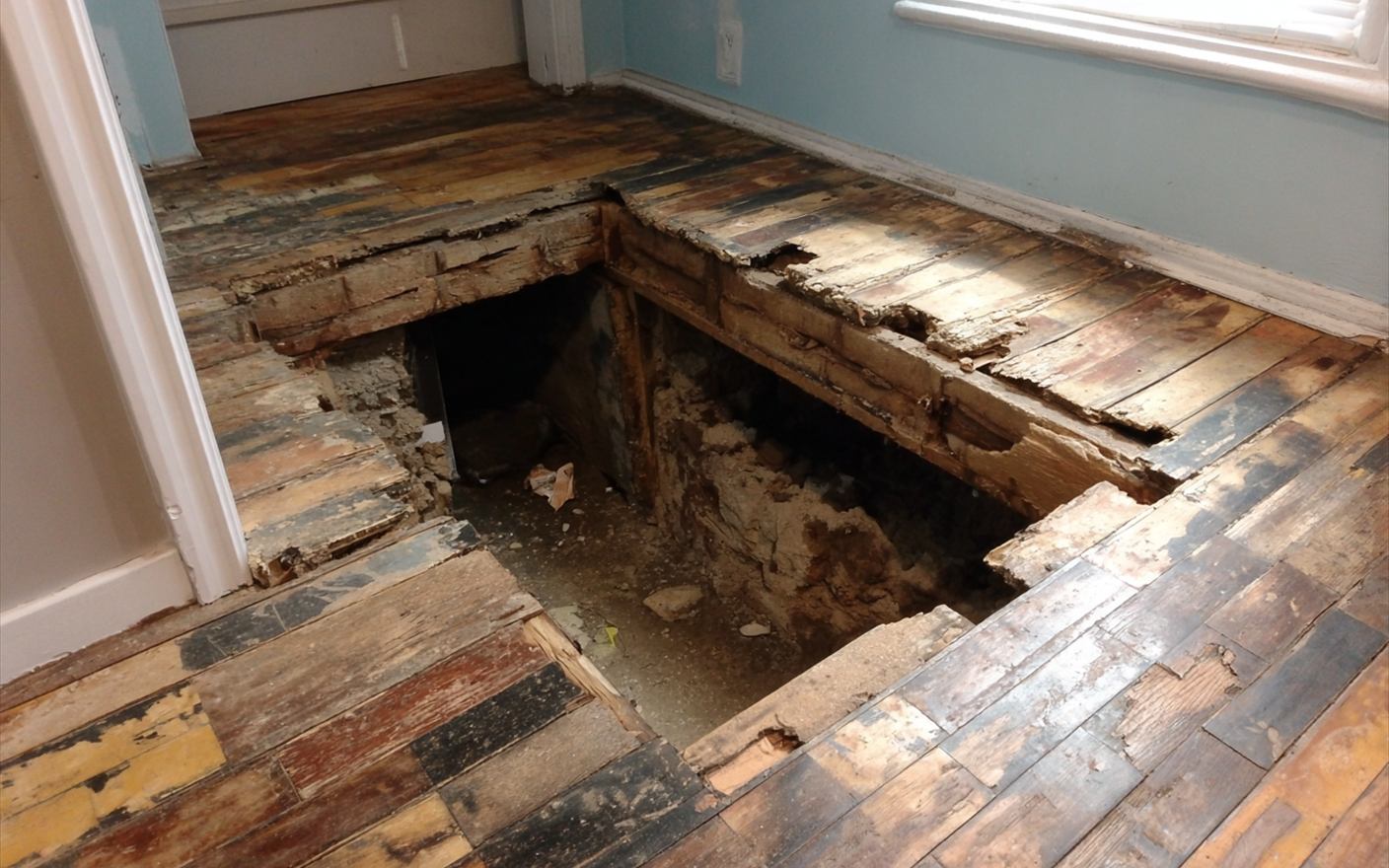
Subfloors: What's Under the Floor After a Leak
Plywood, OSB, particleboard and what survives.