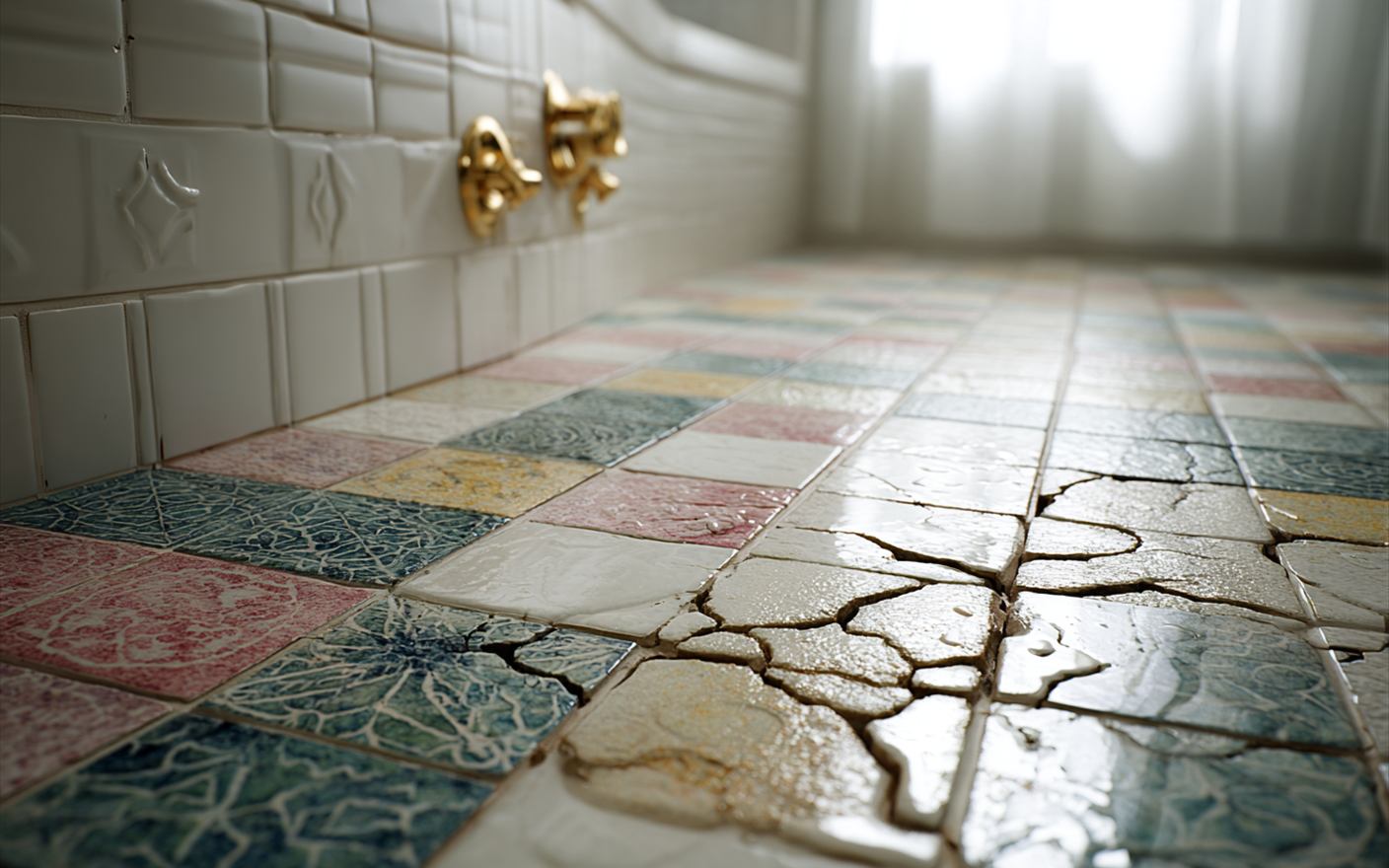
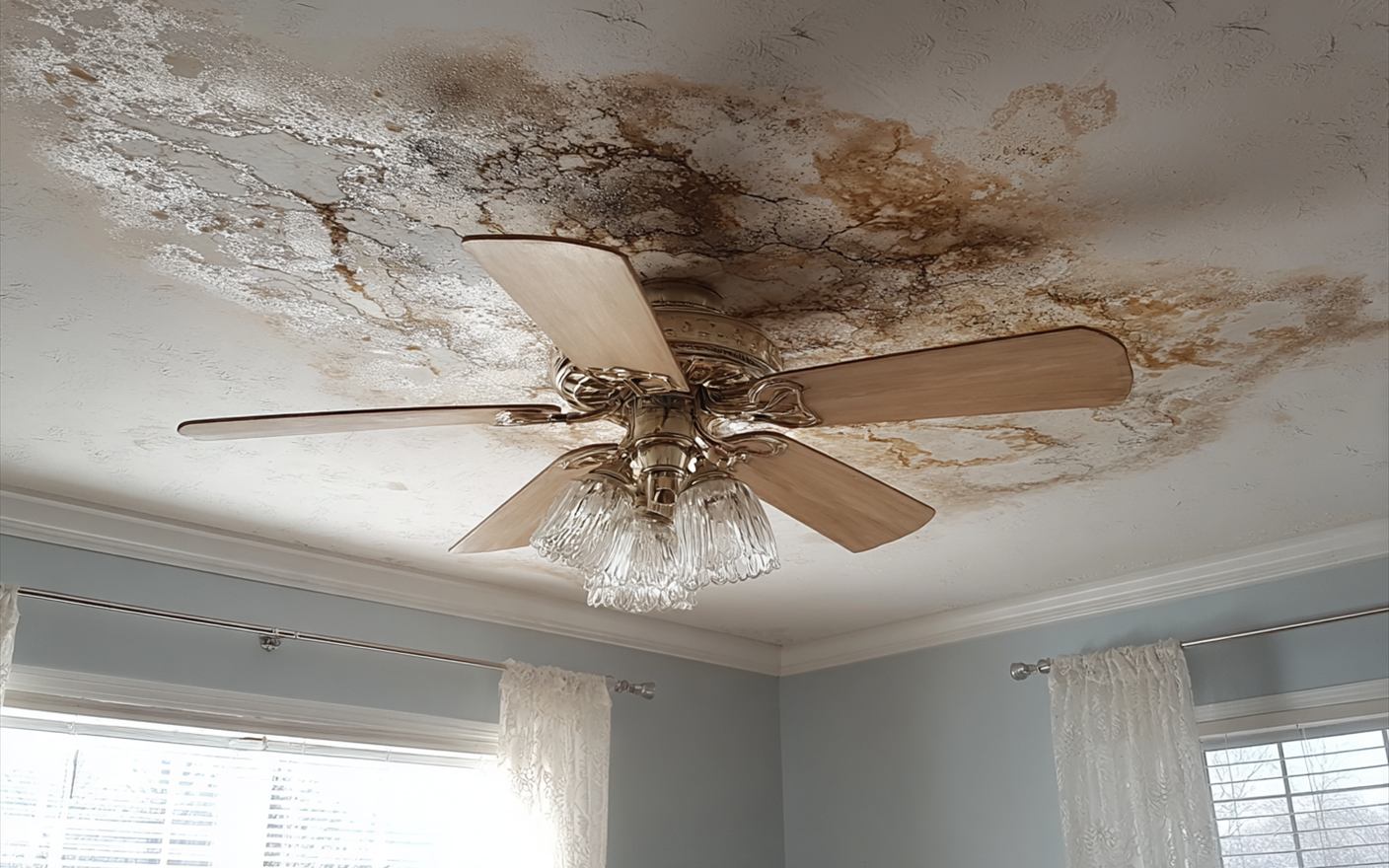
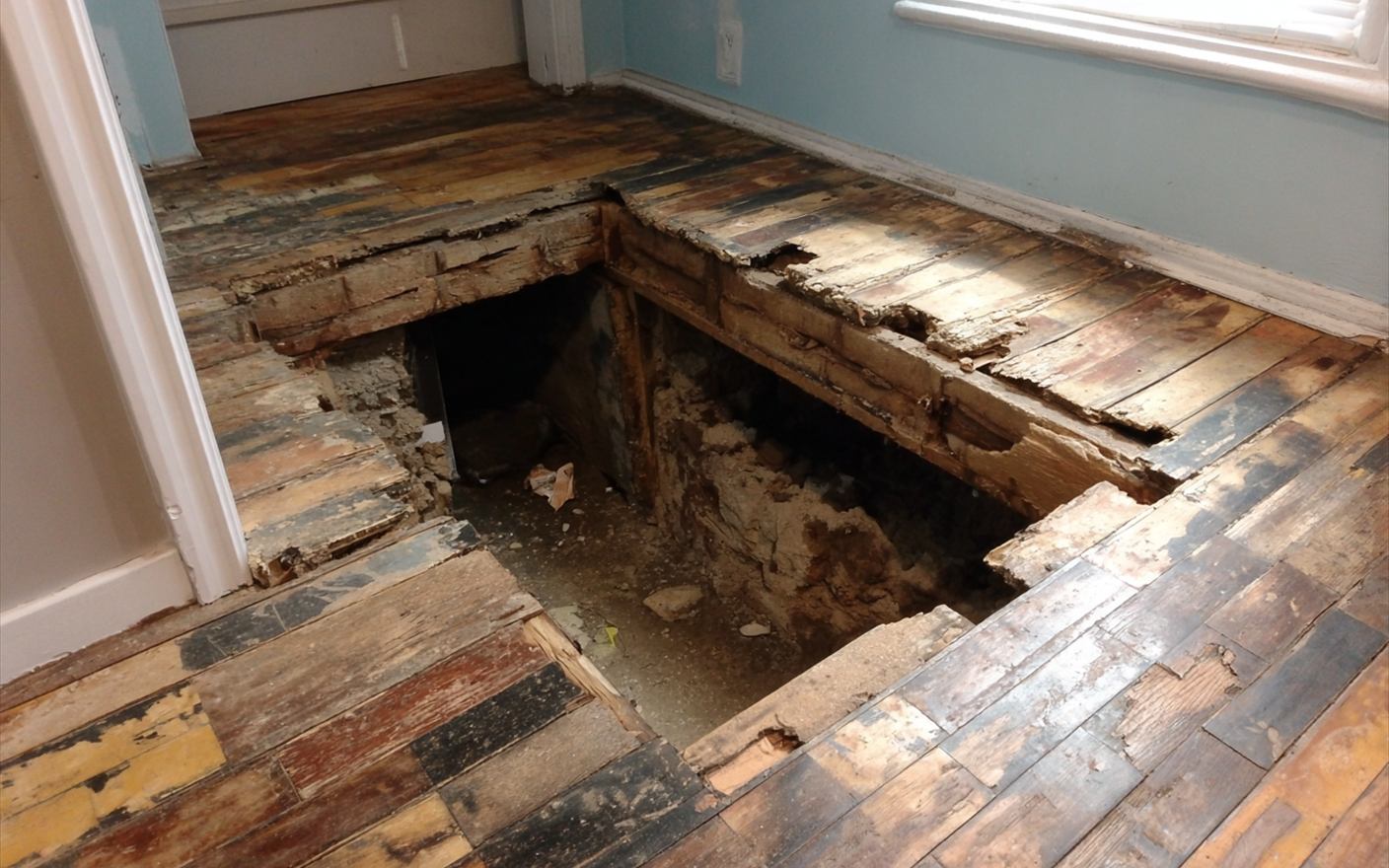
Usual size: a patch of subfloor under the toilet or shower, and a stain on the ceiling below, often after months of slow leaking. The biggest bathroom leaks are easy to find: an overflowing tub, a burst supply line. The ones that do the most damage are slow and hidden. They leak a little every time someone showers or flushes, into the floor and the cavity below, and they show up only when a ceiling stains or a floor goes soft.
The Three Usual Suspects
Toilet seals
A toilet sits on a wax ring (or a foam or rubber seal) that seals it to the drain flange in the floor. When the toilet rocks, or the seal ages, a little water escapes onto the subfloor with each flush. Signs: a toilet that rocks, discolored or soft flooring at its base, a stain on the ceiling below that sits right under the toilet.
Shower pans
A tiled shower relies on a waterproof layer under the tile, either a pan liner or a membrane, to send water to the drain. Grout and tile aren't waterproof by themselves. If the waterproofing fails or was never right, water goes through the grout into the floor every shower. Signs: loose or cracked tile, grout that stays dark long after showers, a stain below that grows after showers.
Tub surrounds
Where a tub meets the wall, and where a surround meets the tub, caulk and seams keep water out. When caulk cracks or a surround's seam opens, shower water runs behind it into the wall and down to the floor. Signs: peeling caulk, soft drywall outside the tub, swollen baseboard, a stain below near the tub's end.
Finding Which One It Is
| Clue | Points to |
|---|---|
| Stain grows after flushes, sits under the toilet | Toilet seal |
| Stain grows after showers, not baths | Shower pan or tile shower |
| Stain grows after both showers and baths, near the tub's end | Tub surround, caulk or the tub drain |
| Stain grows constantly, regardless of use | A supply line, not a fixture |
A restoration company measures moisture from above and below to narrow it down. The fixture itself is then repaired by whoever does that work; the restoration side is drying and rebuilding the floor, wall and ceiling around it.
What the Damage Usually Looks Like Inside
After months of slow leaking, the subfloor under a toilet or shower is often soft or rotted, the joists below may be stained, and insulation in the ceiling below is soaked. That's why the repair is usually bigger than the stain suggests. Opening the ceiling below is often the least disruptive way to see and dry it.
Where Kent Bathrooms Sit
The layout of the house decides where a hidden bathroom leak shows up. In a split-level, the main bathroom is half a floor above the lower family room, so the stain shows on that ceiling. In a two-story house, it's the kitchen or dining room below. In a rambler over a crawlspace, there's no ceiling below at all; the water goes into the subfloor and drips into the crawlspace, where it can go unnoticed for a long time. In a condo, it's your downstairs neighbor who finds it first.
Older Tubs, Newer Showers
Many Kent houses from the 1960s through the 1980s have had their tubs replaced with walk-in showers. A well-built tile shower is watertight, but the waterproofing under the tile is what does the work, and it's invisible once the tile is set. A shower that leaks within a year or two of a remodel often points to the waterproofing. One that starts leaking after fifteen years usually points to grout, caulk or a pan that has aged out.
Questions
Can I just re-caulk the tub?
Fresh caulk can stop water getting behind a surround in the future. It won't dry what's already wet behind it.
My toilet rocks a little. Is that a problem?
A rocking toilet often means the seal is compromised. It's worth having checked before the floor softens.
Will insurance cover a slow leak?
Policies often treat long-term seepage differently from sudden leaks. Ask your insurer, and document when you first noticed it.
Around Kent
Upstairs bathrooms over living space are typical of two-story houses near Star Lake and split-levels in East Hill North. Older rural houses in Ravensdale often have original tubs and surrounds. The ceiling page is ceiling leaks and water stains.
EPA WaterSense: fixing household leaks
When a Ceiling Sags: Getting Out From Under It
What a bulge means and what to do in the next ten minutes.
Subfloors: What's Under the Floor After a Leak
Plywood, OSB, particleboard and what survives.