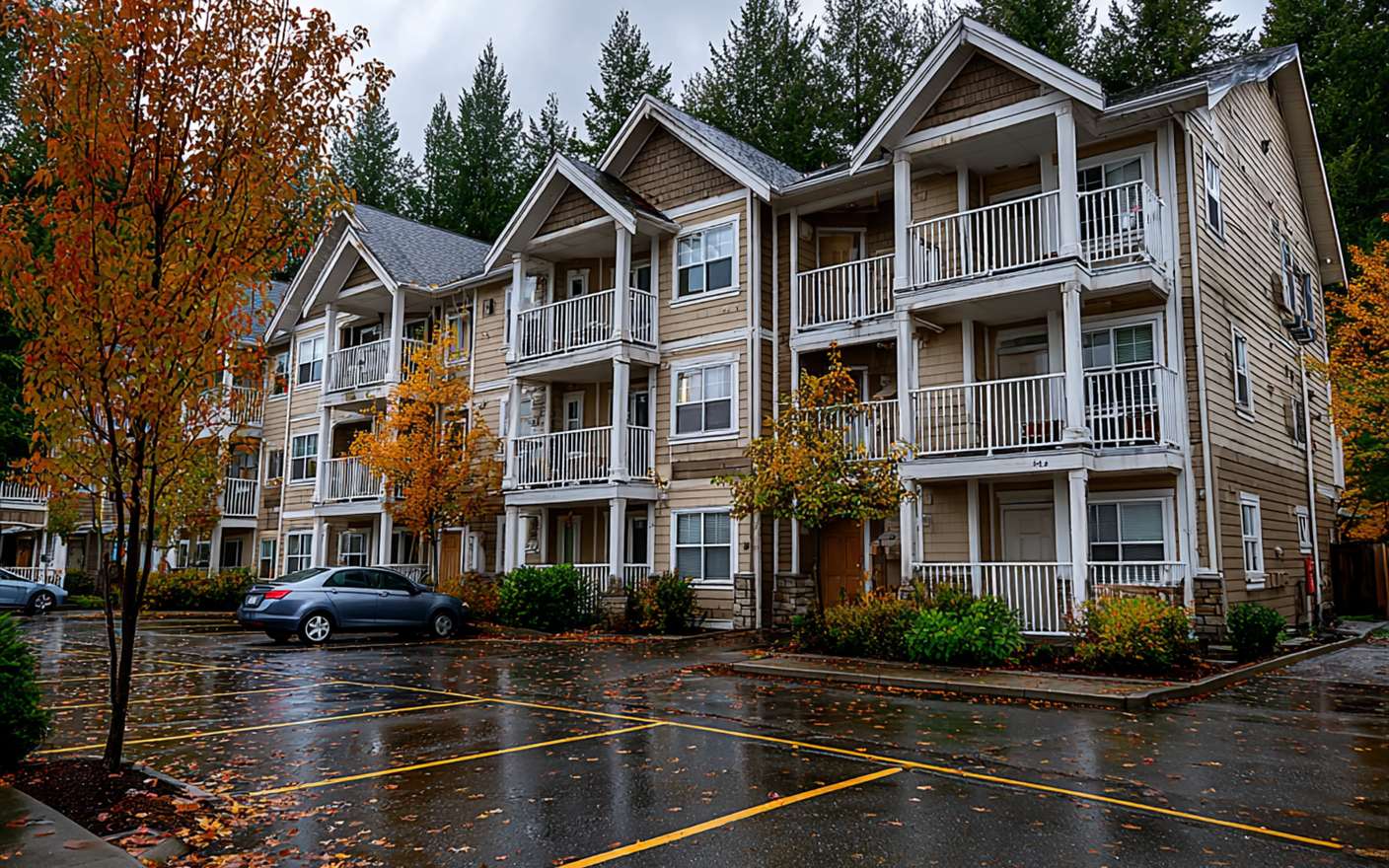
Usual size: your ceiling, their floor, and the cavity between them, sometimes with a wall or a third unit involved. When water comes through your ceiling from the unit above, the hardest part often isn't the drying. It's that two homes, two sets of insurance and an HOA all have a piece of it. Knowing who usually handles what keeps the drying from waiting on the paperwork.
The First Hour
- Stop the water if you can. Knock on the door upstairs. If no one answers and water is pouring, call the HOA's or manager's emergency contact; many buildings have unit shutoffs in a utility closet.
- Protect your things. Move electronics, papers and furniture out from under the leak.
- Turn off the circuit to any wet light or fan.
- Photograph everything, with the time.
- Tell people in writing: the upstairs occupant, the HOA or manager, and your insurer. A short email with photos is enough to start.
Who Usually Handles What
These are general patterns. Your building's declaration, the bylaws, any lease and the insurance policies decide the real answers.
| Part of it | Who usually deals with it |
|---|---|
| The source in the unit above (toilet, tub, washer, water heater) | The upstairs owner, or their landlord |
| The common elements: often the framing, the slab or the shared ceiling assembly | The HOA, sometimes under its master policy |
| The inside of your unit: drywall, paint, flooring, cabinets, depending on the declaration | You and your insurer, or the HOA, depending on where the declaration draws the line |
| Your belongings | You, and your own policy |
| A tenant's belongings | The tenant, and renter's insurance if they have it |
In Washington, condominiums created before July 2018 are generally governed by RCW 64.34, and newer ones by RCW 64.90. Both set out how a declaration defines units and common elements and how insurance works. The declaration for your building is the place to start.
Why the Drying Shouldn't Wait
Responsibility can take weeks to sort out. Wet drywall, insulation and subfloor don't wait that long: drywall weakens, particleboard swells and wet cavities start to smell within days. Most HOAs and insurers expect the water to be dried promptly and the costs sorted out later. Keep receipts and the drying log.
How the Shared Cavity Gets Dried
The space between your ceiling and the floor above holds most of the water. A restoration company usually measures from both units, then opens your ceiling, because it can be patched more easily than lifting a finished floor upstairs. Sometimes the upstairs flooring comes up too, especially if it's laminate over a soaked subfloor. Equipment may run in both units at once.
Ceilings between condo units are often fire-resistive assemblies. When they're opened, they have to be rebuilt to the same standard, so the HOA or building manager usually wants to know before anything is cut.
If the Leak Started in Your Unit
If the leak started in your unit, stop it, tell the neighbor and the HOA right away, and contact your own insurer. Let the restoration company check your floor and the fixture that failed. Cooperating on access shortens the job for everyone.
The Usual Size, Unit by Unit
| Where | What usually needs drying |
|---|---|
| The unit where it started | The floor around the fixture, the subfloor under it, sometimes a wall |
| The cavity between the units | Joists or trusses, insulation, the top of the lower ceiling |
| The unit below | The ceiling drywall, sometimes the walls and floor under the drip |
| A third unit | Only if water followed a pipe chase or a wall down another floor |
Knowing the size helps everyone plan: who needs to give access, how long equipment will run in each home, and what the HOA will want to see.
Insurance Deductibles and HOA Policies
Many condo master policies carry a large deductible, and declarations often say who pays it when a leak starts in a unit. That's one reason unit owners in Washington are often encouraged to carry their own policy with coverage that can respond to a master-policy deductible. Read your declaration and talk to your own agent before the next leak, not after.
Questions
Should I contact my insurer or the HOA first?
Both, and promptly. The HOA needs to know because common elements may be involved; your insurer needs to know because your unit and your belongings are.
The upstairs owner isn't responding. What now?
Contact the HOA or building manager; they usually have a way to reach owners and to shut off water to a unit. Keep documenting.
Can I hire a restoration company myself?
Usually, for your own unit, though coordinating with the HOA first avoids disputes about common elements.
Around Kent
Condos and apartments line Pacific Highway around Midway, near the new station at Star Lake, and along the waterfront in Des Moines. The full service page is condo and apartment leaks.
RCW 64.34, Washington's Condominium Act
Shower Pans, Tub Surrounds and Toilet Seals: Bathroom Leaks You Don't See
The slow leaks that show up a floor below.
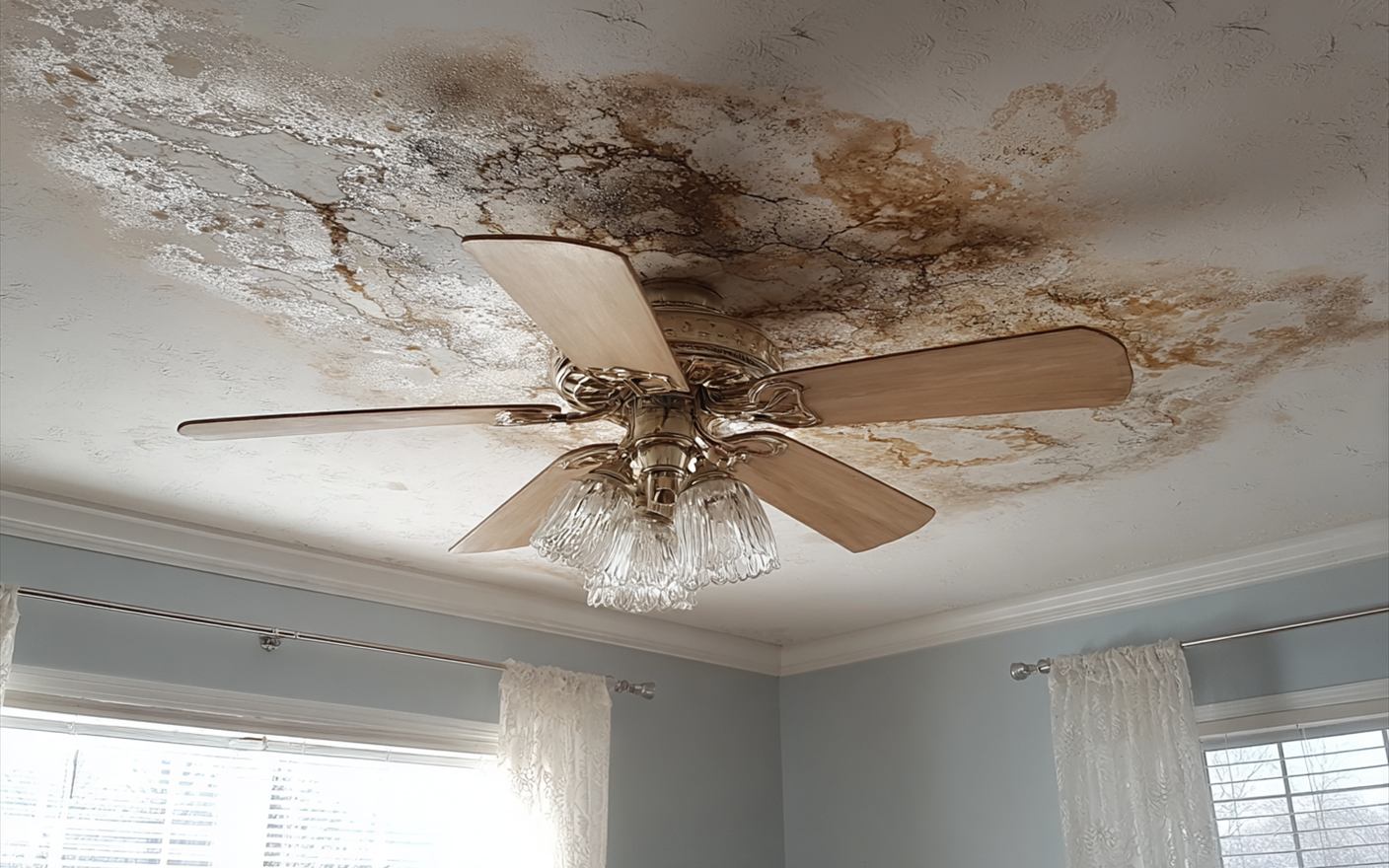
When a Ceiling Sags: Getting Out From Under It
What a bulge means and what to do in the next ten minutes.